
Speed, fit, and durability constantly pull against each other in production, and the factories that manage to balance all three without sacrificing one for another tend to be the ones brands stick with year after year. Watching how experienced bikini manufacturers handle this balancing act reveals just how much technical thinking goes into a product most people assume is fairly basic to produce.
Why Speed and Fit Are Naturally in Tension
Every factory has pressure to move fast, especially during peak swim season when multiple brands are competing for production capacity ahead of summer. But rushing certain steps in bikini construction almost always shows up in fit problems later. Cutting corners on pattern grading, skipping intermediate fit checks, or speeding through stitching on curved seams tends to produce garments that look fine on a hanger but don’t sit right on an actual body.
The factories that handle this well have built processes that stay fast without skipping the specific steps that protect fit consistency, rather than treating speed and accuracy as an either-or choice.
The Role of Fabric Behavior in Setting the Pace
Swim fabric doesn’t behave like standard apparel fabric, and that difference shapes how fast production can realistically move. Four-way stretch material shifts and moves during cutting in ways that woven fabrics don’t, which means cutting has to be done more carefully to avoid distortion.
Rushing this step leads to pieces that don’t match up correctly once sewn, creating twisted seams or uneven cup shaping in bikini tops. Manufacturers who understand this build in slightly more time at the cutting stage specifically because they know shortcuts here create expensive problems downstream.
Durability Starts Long Before the Final Stitch
A lot of buyers assume durability is mostly about the final stitching, but the groundwork actually starts with fabric selection and how seams are reinforced before they’re ever exposed to water or sun.
Chlorine and saltwater are hard on synthetic fibers over time, and factories that prioritize durability choose fabric blends specifically tested for that kind of repeated exposure rather than defaulting to whatever’s cheapest or most readily available.
Reinforced stitching at stress points, particularly where straps meet the body of the garment, also plays a bigger role in long-term durability than most people realize until they’ve dealt with a strap that tears loose after a handful of wears.
Balancing Consistency Across Larger Runs
Fit and durability standards that hold up in a small sample batch don’t automatically carry over once a factory scales into a much bigger production run. Maintaining consistency at volume takes deliberate process design, locked reference patterns, staged quality checkpoints, and clear standards that get applied the same way whether it’s the first unit off the line or the last one in a batch of several thousand.
Factories that skip this step often produce noticeably different results between early and late units in the same run, which shows up as sizing drift or subtle quality inconsistency that buyers only notice after the fact.
Why Elastic and Hardware Choices Matter More Than They Seem
Small components like elastic, clasps, and rings often get overlooked in conversations about bikini quality, but they’re frequently where durability problems actually start. Elastic that loses its recovery after repeated stretching leads to bottoms that sag or tops that lose support within a season.
Hardware that corrodes from saltwater or chlorine exposure creates a similar problem. Manufacturers focused on genuine durability pay close attention to these smaller components, testing recovery and corrosion resistance specifically, rather than treating them as an afterthought compared to the main fabric.
How Technology Has Sped Up Certain Steps Without Cutting Quality
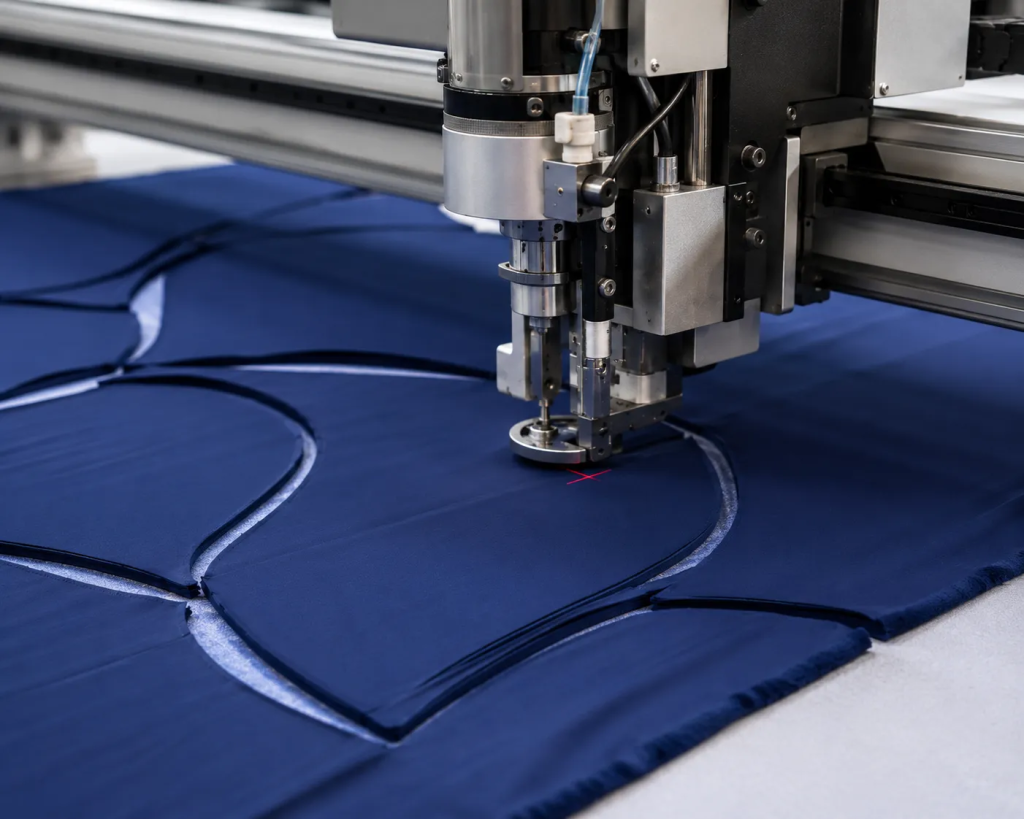
Some of the speed gains in modern bikini production haven’t come from rushing traditional steps, but from adopting better tools for the parts of the process that used to be slow without adding much value. Automated cutting systems, for example, can now handle stretch fabric more precisely than manual cutting in less time, reducing waste and improving consistency simultaneously.
This is one area where speed and quality have actually moved in the same direction rather than working against each other, though it requires investment in equipment that not every factory has made.
What This Means for Brands Choosing a Manufacturing Partner
Understanding this balancing act helps brands ask better questions when evaluating a potential manufacturer. Instead of only asking about turnaround time, it’s worth asking specifically how a factory maintains fit consistency and durability standards while still meeting fast production schedules.
A manufacturer that can speak clearly about where they’ve invested in speed without cutting corners, better cutting technology, staged quality checks, tested fabric and hardware, is usually a stronger long-term partner than one that only talks about how quickly they can turn around an order.
Final Thoughts
The best bikini manufacturers aren’t the ones who’ve found a way to avoid the tension between speed, fit, and durability, they’ve found ways to manage that tension deliberately instead of pretending it doesn’t exist. Cutting corners in any one area eventually shows up as a problem in another, whether that’s a rushed production timeline leading to fit issues, or a focus purely on speed leading to durability problems that surface after a few uses.
Brands that take the time to understand how a factory actually balances these competing demands tend to end up with a more reliable, longer-lasting product, and a manufacturing relationship that holds up over multiple seasons rather than just one good first order.
