
Industry estimates put the global beauty market north of $400 billion, and the fastest-growing slice of it isn’t lipstick. It’s prestige skincare, the category people research before they buy, compare ingredient by ingredient, and increasingly track down across borders when a local counter doesn’t stock it. Canadian shoppers sit right in the middle of that shift. Ask a skincare obsessive in Toronto or Vancouver where they get their serums, and you’ll often hear a brand name first and a store name second.
That ordering matters. It tells you something about how purchasing decisions in this category actually form.
The brand leads, the retailer follows
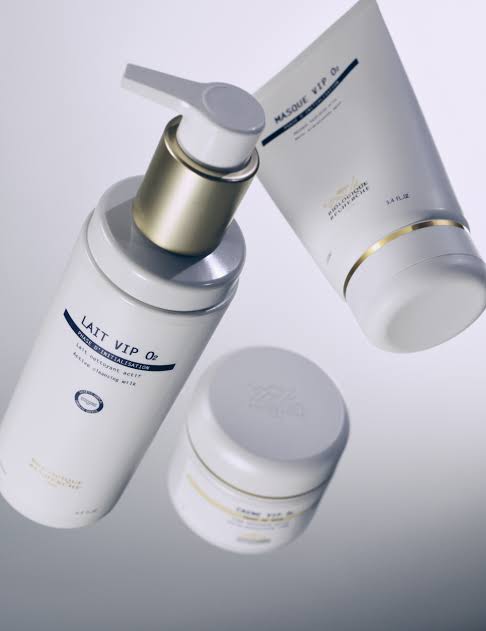
For most consumer goods, the store comes first. You go to the supermarket, then decide what to put in the cart. Prestige skincare inverts that. A buyer reads about a formula, watches an esthetician break it down, hears it mentioned by someone whose skin they admire, and only then asks the practical question: who carries it near me? Anyone tracking down Biologique Recherche in Canada is following exactly this path, starting from a specific clinical brand and working backward to a stockist that can supply it with the product knowledge to match.
This is why specialist retailers have quietly gained ground on department stores in the category. A generalist beauty hall at a chain like Holt Renfrew carries dozens of lines and trains staff to move volume across all of them. A focused stockist builds depth. The person selling you a moisturizer can tell you what to layer underneath it, what to avoid combining it with, and which version suits your skin’s current condition rather than its label “type.” For a brand built on diagnosis rather than one-size-fits-all routines, that depth isn’t a luxury. It’s the entire point.
Why professional-grade lines resist mass retail
Biologique Recherche grew out of a clinical practice, not a marketing department. Its products are concentrated, its methodology hinges on reading the skin in front of you, and much of its catalogue was designed to be dispensed by trained professionals. Lotion P50, the brand’s cult exfoliating treatment, comes in several formulations precisely because the “right” one depends on the individual. You cannot bulk-distribute that kind of product through a thousand undifferentiated shelves and expect it to be used well.
So the brand stays selective about who sells it. That selectivity creates a small frustration for Canadian buyers, who often discover the line through a spa facial or a friend’s recommendation and then find it absent from the big retailers they usually shop. The gap between awareness and access is real, and it explains the steady search traffic. People know what they want before they know where to get it.
What this means for the Canadian market specifically
Canada adds its own wrinkles to the picture. Cross-border shipping, customs, currency conversion, and authenticity worries all push buyers toward domestic stockists who hold inventory locally and price in Canadian dollars. A serum that looks like a deal on a foreign site can arrive weeks later, taxed at the border, with no guarantee it was stored correctly in transit. Shoppers have learned this the expensive way.
The result is a preference for retailers who carry the line properly: real stock, local fulfilment, and staff who understand the product rather than reading the box back to you. Sephora taught a generation of Canadians to expect a certain baseline of beauty retail polish. The specialist stockists serving clinical brands now compete on something Sephora’s scale can’t easily replicate, which is genuine expertise in a narrow range.
There’s also a trust dimension. Luxury skincare is a prime target for counterfeiters and grey-market resellers, and a $42-to-$160 exfoliating lotion is exactly the kind of item that gets faked or diverted. Buyers chasing a specific French brand have grown cautious. They want to know the retailer is a legitimate, authorized source, not an opaque marketplace listing of uncertain provenance.
Climate gives the preference an extra push. Canadian winters are punishing on skin, with dry indoor heat and harsh cold stripping the barrier in ways that change what a routine needs to do for half the year. Buyers who’ve felt that seasonal swing tend to value a stockist who understands it and can adjust recommendations as the weather turns, rather than selling the same summer routine into a January cold snap. A retailer fluent in how skin behaves in this specific climate is offering local knowledge that a foreign website, however cheap, can’t replicate.
The professional channel still anchors everything
One reason these brands keep their professional roots visible is that the in-person experience drives so much of the purchasing. Someone books a facial, an esthetician diagnoses their skin’s current state, recommends a short routine, and the buyer walks out converted. The treatment chair does the selling. The retail shelf, online or off, mostly fulfils a decision that was already made.
That’s a healthier dynamic than the impulse-buy model that dominates mass beauty. It means the brands carried this way tend to retain customers longer, because the initial purchase came with instruction rather than just packaging. Compare it to the typical experience of buying a moisturizer because the jar looked nice next to the till. One of those routines survives the bottle running out. The other doesn’t.
Clinical houses like La Mer occupy a similar position, sold through curated channels and anchored by an origin story rooted in formulation rather than fashion. The pattern holds across the prestige end of the category: the more a brand depends on being understood, the more it depends on the people selling it.
Where the category goes next
The trajectory points toward consolidation around expertise. As more buyers research before they purchase, the retailers who win are the ones who can answer the second and third questions, not just process the transaction. Stocking the right brands is table stakes. Knowing how to use them is the differentiator.
For Canadian shoppers, that translates into a fairly practical shortlist of what to look for in a stockist: authorized sourcing, local inventory and pricing, a staff that can talk through a routine, and ideally a connection to professional treatment so the advice has clinical grounding. A storefront that offers all four is selling something more durable than products. It’s selling the confidence that you’re using them correctly.
The search behaviour, in the end, is a signal worth reading. When people look for a specific clinical brand by name and region, they’re not bargain hunting. They’ve already decided the formula is worth it and are simply solving for trustworthy access. The retailers who understand that, and who treat the sale as the start of a relationship rather than the end of one, are the ones quietly building the future of how prestige skincare gets bought in this country.
