
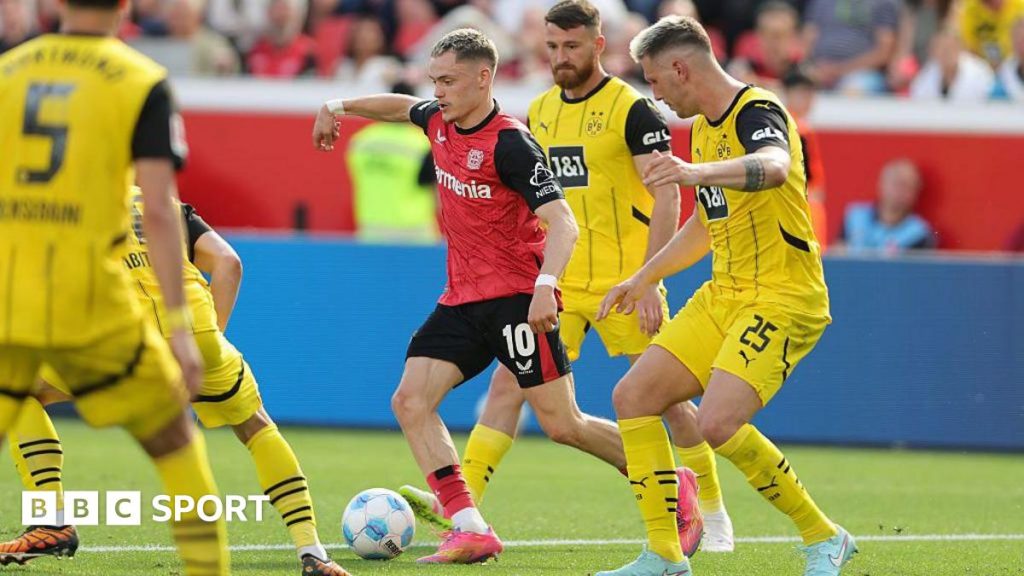
Dribbling in the Bundesliga is not merely an expression of flair but a tactical instrument shaped by league tempo, defensive spacing, and transition-heavy football. Understanding dribbling skill in this context requires separating aesthetic success from functional impact, especially when evaluating how individual take-ons alter team dynamics and match outcomes.
Dribbling emerges from structural demand, not individual ego
Bundesliga teams frequently operate in open structures with aggressive pressing. The cause is a league-wide emphasis on verticality and speed. The outcome is frequent isolation scenarios. The impact is that players with strong dribbling ability become tactical release valves rather than optional creators.
This explains why dribblers are often positioned wide or between lines rather than centrally.
Success rates matter more than volume
High dribble attempts do not automatically signal effectiveness. The cause of overestimation is highlight bias. The outcome is misreading player influence. The impact is incorrect tactical conclusions.
Before listing key efficiency indicators, it is important to clarify that Bundesliga defenses punish failed take-ons quickly.
Key efficiency indicators for dribblers:
- Dribble success percentage under pressure
- Fouls drawn per successful take-on
- Ball retention after the dribble
- Progressive distance gained
- Immediate action following the take-on
Interpreting this list shows that effective dribbling is measured by what happens after the move, not during it.
Space creation is the primary payoff
The true value of dribbling lies in defensive distortion. The cause is forced defender commitment. The outcome is numerical imbalance. The impact is new passing lanes or shooting windows.
Dribblers who attract two defenders often contribute even without completing the action.
Mechanism: how dribbling reshapes defensive lines
When a defender steps out to engage, the defensive line loses horizontal compactness. This mechanism creates fractional advantages that passing alone cannot generate, especially against mid-blocks.
Context determines dribble value
A successful take-on in transition carries different value than one in settled possession. The cause is defensive orientation. The outcome is varying threat levels. The impact is that identical actions produce different results.
Bundesliga dribblers are most dangerous when attacking defenders who are backpedaling.
Dribbling risk amplifies transition exposure
Failed dribbles often lead directly to counterattacks. The cause is ball loss in advanced zones. The outcome is stretched recovery lines. The impact is higher xGA immediately after turnovers.
This trade-off explains why some coaches limit dribbling freedom despite technical quality.
Live reading of dribbling impact
During matches, dribbling influence becomes visible through defensive reactions rather than statistics. When defenders hesitate, delay stepping out, or drop deeper, the dribbler is already affecting the game state. Under these situational conditions, observing how markets react in environments like ufabet เว็บหลัก highlights delayed adjustments. The cause is overreliance on raw possession data, the outcome is mispriced momentum, and the impact is undervaluing players who destabilize structure without scoring.
Comparing dribblers by role, not position
Comparisons should be role-based rather than positional. A winger tasked with isolation differs fundamentally from an attacking midfielder dribbling in congestion.
Before reviewing the comparison table, note that role clarity determines risk tolerance.
| Role type | Typical dribble zone | Risk level | Tactical purpose |
| Touchline winger | Wide channels | Medium | Create crossing angles |
| Half-space attacker | Between lines | High | Break compact blocks |
| Ball-carrying midfielder | Central lanes | Very high | Progress play |
| Counter attacker | Open field | Low | Exploit space |
The interpretation is that dribbling efficiency must be judged against assigned tactical responsibility.
Where dribbling fails to add value
Dribbling loses effectiveness against deep blocks with layered cover. The cause is reduced isolation. The outcome is forced backward play. The impact is slowed tempo without penetration.
In such scenarios, circulation and positioning outperform individual take-ons.
Summary
Dribbling in the Bundesliga functions as a structural tool shaped by space, tempo, and defensive behavior. Its true value lies in space creation, defensive distortion, and transition leverage rather than raw success counts. When evaluated through efficiency, context, and role-based comparison, dribbling skill becomes a measurable contributor rather than a subjective highlight.
